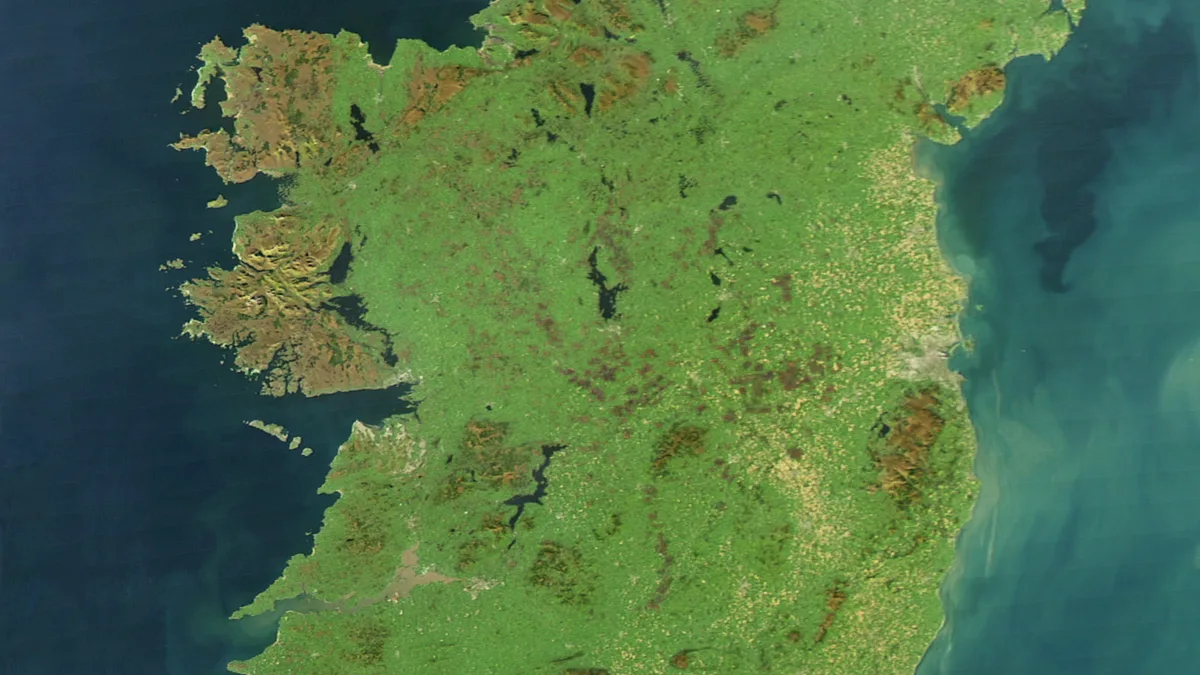
Ireland
| Country of origin | Ireland |
|---|---|
| First created | 20th century (post-1922) |
| Original use | To permit non-EEA nationals to reside in Ireland for full-time study |
| Official name | Stamp 2 |
| Issuing authority | Irish Naturalisation and Immigration Service (INIS) |
| Typical validity | Aligned with course duration |
| Work permission | Limited, during and after studies |
Origin and history
Ireland is an island nation located in the North Atlantic, geographically part of the continent of Europe. Its earliest human settlements date back to the prehistoric period, with the arrival of hunter-gatherers around 8000 BC. Celtic culture and language became dominant on the island from roughly the 6th century BC onwards, forming a foundational element of Irish identity. The island's political history was profoundly shaped by English and later British colonization, beginning in the late 12th century. Following a war of independence, the island was partitioned in the 1920s, leading to the creation of the independent Irish Free State, which is now the Republic of Ireland. The modern state has been a member of the European Union since 1973, influencing its contemporary economic and social policies.
What it is for
Ireland functions as a sovereign state with its own government, legal system, and international relations. The country provides a national territory and legal framework for its citizens, encompassing systems of education, healthcare, and infrastructure. For non-citizens, it serves as a destination for tourism, business, and education, requiring specific permissions for entry and residence. The Irish student visa, formally known as a Study Visa, is the specific immigration permission that gates entry for this educational purpose. This visa is designed to allow non-EEA nationals to reside in Ireland temporarily to pursue a full-time course at an accredited Irish educational institution. Its primary function is to regulate and permit study-based immigration, ensuring students are formally registered and their stay is tied to academic enrollment.
Pros and cons
A significant advantage of choosing Ireland for study is access to a well-regarded education system, particularly strong in fields like technology, medicine, and humanities, within an English-speaking environment. The country offers a relatively safe and politically stable setting with a rich cultural landscape. A major con is the high cost of living, especially in urban centers like Dublin, where accommodation crises make securing affordable housing exceptionally difficult and stressful. Students often regret underestimating these living expenses, which can far outstrip tuition costs, leading to financial strain. The common mistake is arriving without substantial savings beyond tuition fees, as student visa work permissions are limited and may not cover living costs. Furthermore, the climate, characterized by frequent rain and mild but damp winters, is a notable drawback for many who find it challenging to adjust.
Who it suits
This destination suits students seeking accredited degree programs, particularly at the postgraduate level, in its institutions' specialist fields. It is a strong match for non-EEA nationals who are proficient in English and wish to immerse themselves in an English-speaking European culture without needing to learn another language. The path suits individuals with considerable financial backing, as it requires proof of substantial funds to cover tuition and living expenses during the visa application. It is less suitable for those seeking extensive part-time work opportunities, as visa restrictions limit work hours during term time. Students who value a compact, accessible country with a vibrant social scene and historical sites may find it a good fit. Ultimately, it is for those whose primary goal is to obtain a recognized qualification from an Irish institution while navigating the structured requirements of a temporary student immigration system.