Blocked Account
| Blocked amount | Required minimum |
|---|---|
| Financial institution | Designated bank |
| Purpose | Proof of financial means |
| Access to funds | Restricted monthly disbursement |
| Document type | Mandatory for visa application |
| Validity period | Typically one year |
| Account currency | Usually Euro |
Overview
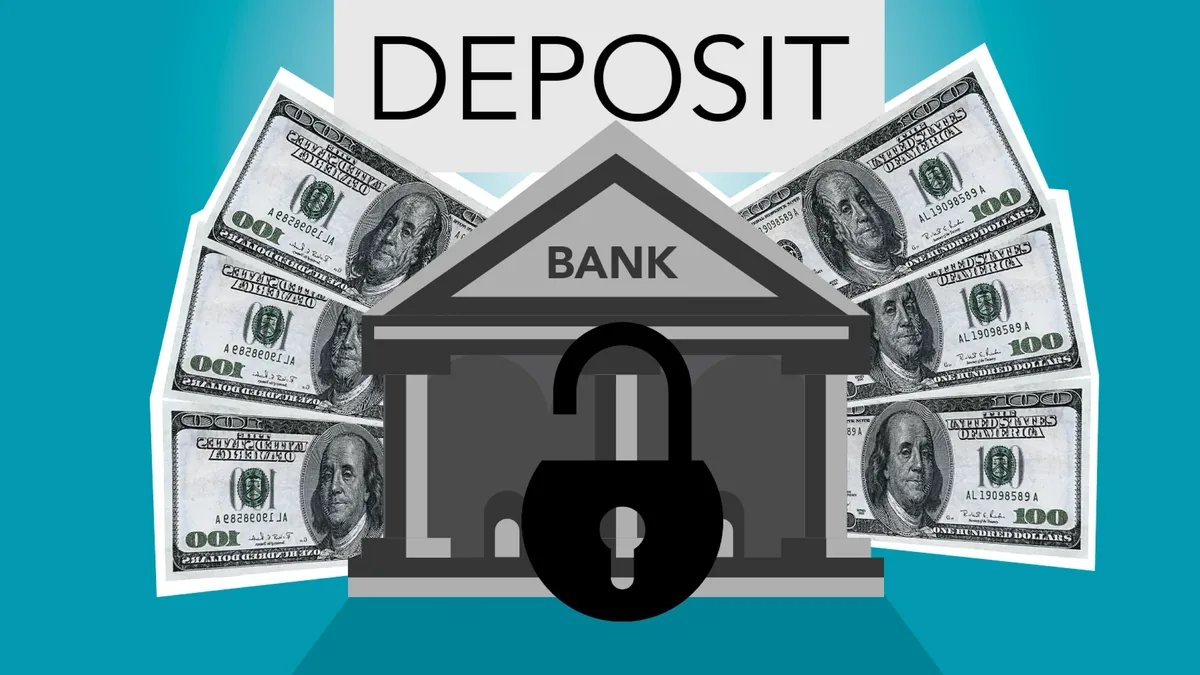
A blocked account is a special financial instrument required by certain countries as proof of sufficient funds for international students applying for a long-term student visa. It functions as a secured bank account where the applicant deposits a mandatory minimum amount of money, which is then inaccessible for withdrawal in a lump sum. The purpose is to guarantee that the student has the financial means to cover living expenses for their first year of study without relying on public funds. The account holder can only access a predetermined monthly portion of the total sum, ensuring sustained financial support throughout the initial residency period. This mechanism is a standard requirement for student visa applications to countries like Germany and Austria, forming a critical part of the immigration process. It provides immigration authorities with a verifiable and secure assurance of the applicant's economic stability.
History
The concept of the blocked account, or *Sperrkonto*, originates from Germany and was formally integrated into its immigration framework in the latter half of the 20th century. Its development is closely tied to post-war regulations designed to manage the residence and financial stability of foreign nationals entering the country for extended periods. The system was established to address concerns that international students might become a financial burden on the state's social welfare systems if their funds proved insufficient. By the final decades of the 1900s, it had become a standardized prerequisite for the student visa application process at German consulates worldwide. The model was later adopted by other nations with similar immigration concerns, adapting the core principle of secured, rationed funds to their own regulatory contexts. Its historical foundation is rooted in administrative caution and the need for a standardized, enforceable proof of financial resources.
How it works today
Today, a prospective student must open a blocked account with a bank authorized by the destination country's immigration authority before submitting their visa application. In Germany, for instance, this involves transferring the full required amount, which is set annually by the government, into a designated account with a partner bank such as Deutsche Bank, Fintiba, or Coracle. The funds are then legally "blocked," meaning the account holder cannot withdraw the entire sum at once. After arrival and registration, the student receives a debit card or banking access allowing them to withdraw a fixed monthly stipend, typically one-twelfth of the annual total. The bank provides a confirmation document, which is the essential proof of finances submitted with the visa application. The account remains blocked until the student either closes it after leaving the country or converts it to a standard bank account upon meeting certain long-term residency criteria.
Blocked Account visa for indians
Indian students applying for a German student visa are universally required to provide proof of a blocked account as their primary means of demonstrating financial resources. The process involves selecting an approved German blocked account provider, many of which offer online account opening specifically tailored for applicants from India. Indian students must ensure the funds are transferred well in advance, accounting for foreign exchange conversion and international bank processing times, which can be a significant logistical step. The blocked account confirmation document, alongside the university admission letter and other visa paperwork, must be submitted to the German Embassy or Consulate in India, such as those in New Delhi, Mumbai, or Chennai. It is crucial for Indian applicants to verify the current required amount in Euros and use only authorized transfer methods to avoid delays or rejection. This requirement applies uniformly regardless of the Indian state from which the applicant is applying.
Blocked Account visa requirements
The primary requirement is the confirmation document from an approved blocked account provider, certifying that the full mandated amount is deposited and secured. The applicant must possess a valid passport and an official letter of admission from a recognized university in the destination country. Proof of health insurance coverage valid in the destination country for the entire duration of the stay is also a mandatory accompanying document. A completed national visa application form, a biometric photograph, and payment of the non-refundable visa application fee are standard procedural requirements. Some consulates may also require proof of previous academic qualifications and a personal motivational statement or CV. It is essential that the blocked account is opened in the exact name of the visa applicant, as discrepancies between account and passport names will lead to rejection.
Blocked Account visa cost
The cost structure for a blocked account involves several distinct components beyond the principal deposit amount. The student must deposit the full legally stipulated minimum living amount, which is a figure set by the national government and subject to periodic review. Additionally, most blocked account providers charge a one-time setup fee for establishing the account, which varies between different banking service providers. There is also typically an annual account management fee, deducted from the account balance, for the administrative maintenance of the blocked account. The international bank transfer to fund the account will incur transaction fees and potentially less favorable exchange rates, depending on the student's home bank. The visa application itself requires a separate, non-refundable processing fee paid directly to the embassy or consulate, which is not part of the blocked account costs.
Why it matters
The blocked account system matters because it provides a standardized, fraud-resistant method for immigration authorities to assess the financial readiness of thousands of international students annually. It protects the destination country's social security systems by ensuring students have a legally secured minimum income, preventing destitution and unauthorized work. For the student, it offers a structured budgeting framework, forcing the disciplined management of living expenses over the challenging first year abroad. The requirement also creates a clear, equitable benchmark for all applicants, removing subjective assessment of financial means from the visa officer's discretion. Its existence simplifies the bank's role, as they act as a regulated third-party verifier, reducing the administrative burden on the immigration authorities. Ultimately, it facilitates the controlled movement of global academic talent by providing a trusted financial guarantee.
Common misconceptions
A common misconception is that the money in a blocked account earns significant interest, whereas in reality, the interest rates on these specially restricted accounts are typically minimal or nonexistent. Many applicants mistakenly believe they can use the blocked account funds to pay their university tuition fees, but the account is strictly intended for covering living costs only. Another error is assuming the process can be completed instantly; in fact, funding the account and receiving the confirmation document requires careful planning and several days or weeks of lead time. Some students think that once they arrive in the country, they can immediately unlock the full amount, but the monthly disbursement rule remains in force for the duration of the block. There is also a belief that a regular bank statement showing equivalent funds is an acceptable substitute, which is almost universally not the case for the specific national student visa. Finally, applicants often overlook that the blocked account is only one part of the visa application, and its possession does not guarantee visa approval if other criteria are not met.