Opt And Stem Opt
| Destination country | United States |
|---|---|
| Governing body | U.S. Citizenship and Immigration Services (USCIS) |
| Eligible degree levels | Bachelor's, Master's, Doctorate |
| Post-completion work period | 12 months standard, 24-month STEM extension |
| Eligibility requirement | Degree from SEVP-certified U.S. institution |
| Application prerequisite | Valid F-1 student status |
| Primary purpose | Practical training in field of study |
Overview
OPT and STEM OPT are specialized work authorization programs in the United States, not visas themselves, that allow international students on F-1 visas to gain practical training in their field of study. OPT, or Optional Practical Training, permits employment directly related to a student's major area of study for a standard period of up to 12 months. STEM OPT is a 24-month extension of this period available to students who have earned degrees in designated Science, Technology, Engineering, and Mathematics fields. These programs serve as a critical bridge between academic study and professional employment within the U.S. economy. They are administered by U.S. Citizenship and Immigration Services (USCIS) in conjunction with the Student and Exchange Visitor Program (SEVP). Participation in these programs does not change the underlying F-1 student visa status but provides a temporary work permit tied to that status.
History
The framework for Optional Practical Training originates from longstanding U.S. immigration regulations governing the F-1 student visa category, with its basic form established in the latter half of the 20th century. The STEM OPT extension is a more recent policy innovation, created in the early 21st century to address perceived shortages of skilled technical workers in the American labor market. It was formally codified in federal regulations to encourage international students with specific advanced degrees to remain and contribute their skills in the United States post-graduation. The list of qualifying STEM fields is defined by the U.S. Department of Homeland Security and is periodically updated, reflecting changes in educational and industry standards. The program's history includes legal challenges and subsequent regulatory adjustments aimed at ensuring its integrity and alignment with both educational and economic objectives. These programs have evolved as key instruments of U.S. policy to retain global talent educated at American institutions.
How it works today
A student on an F-1 visa must first apply for and receive an Employment Authorization Document (EAD) from USCIS before beginning any OPT employment. Standard post-completion OPT must be directly related to the student's major and can be utilized for a maximum of 12 months total per educational degree level. Students eligible for the STEM OPT extension must have a job offer from an employer enrolled in and using the E-Verify program, and the employer must provide a formal training plan outlining learning objectives. The combined maximum period for standard OPT and the STEM extension is 36 months for eligible students. During the OPT period, students remain under the administrative purview of their designated school official (DSO), who must update their record in the SEVIS database. Unemployment is strictly limited during OPT, with standard OPT allowing a total of 90 days of unemployment and the STEM OPT extension allowing an additional 60 days, for a total of 150 days over the 36-month period.
Opt And Stem Opt visa for indians
Indian nationals constitute one of the largest cohorts of international students in the United States and are consequently major participants in the OPT and STEM OPT programs. For Indian students, particularly those in graduate programs in engineering, computer science, and related technical fields, the STEM OPT extension is a highly sought-after pathway to gain extended U.S. work experience. This period is often crucial for Indian students seeking to gain competitive industry experience and potentially transition to longer-term work visas like the H-1B. The high proportion of Indian students in STEM disciplines means the specific rules and limitations of the STEM OPT program are of paramount importance to this group. Navigating the requirements successfully is a common focus for Indian student communities and advisory services at universities. The program's stability and duration directly impact the post-graduation planning of thousands of Indian students annually.
Opt And Stem Opt visa requirements
Eligibility for standard OPT requires the student to have been enrolled full-time in an SEVP-certified academic institution for at least one full academic year and to be in valid F-1 status. The application process requires a formal recommendation from the university's designated school official (DSO) on the Form I-20 and the subsequent filing of Form I-765, Application for Employment Authorization, with USCIS. For the STEM OPT extension, the student must hold a degree in a DHS-designated STEM field from an accredited U.S. institution and the employing company must be enrolled in E-Verify. The student and employer must jointly complete and sign Form I-983, the Training Plan for STEM OPT Students, which details the structured mentoring and training objectives. All employment during OPT must be commensurate with the level of the student's education and must provide a minimum of 20 hours of work per week. Students must report any changes in employment or residential address to their DSO within regulatory deadlines to maintain status.
Opt And Stem Opt visa cost
The primary direct cost for the applicant is the USCIS filing fee for Form I-765, which is a mandatory and non-refundable charge required for both initial OPT and the STEM OPT extension applications. Additional costs may include fees for passport-style photographs and postage or courier services for mailing the application packet. While the programs themselves do not have a separate cost, students often incur significant indirect expenses related to maintaining their F-1 status during the application period, such as living expenses during processing times. Some students may also choose to pay for legal or advisory services to assist with the application, though this is not a government requirement. There is no separate fee paid to the employer or the educational institution for the authorization, though standard university international student service fees may apply. Applicants should budget for the possibility of delays and the associated costs of maintaining themselves during unforeseen gaps in employment authorization.
Why it matters
The OPT and STEM OPT programs are critical for the U.S. higher education system, making American universities more attractive to top-tier international students seeking both academic and professional outcomes. These programs provide a structured, legal pathway for students to apply theoretical knowledge in a practical U.S. work environment, enhancing the value of their American degree. For the U.S. economy, they act as a talent pipeline, allowing companies to recruit from a pool of graduates already trained in American methods and familiar with the domestic business landscape. The programs offer a transitional period that benefits students, educational institutions, and employers without constituting a direct path to permanent immigration. Their existence influences global student mobility patterns, with many students factoring the possibility of post-study work into their decision to enroll in U.S. programs. The regulatory framework of these programs also tests the balance between open educational exchange and controlled workforce integration.
Common misconceptions
A prevalent misconception is that OPT and STEM OPT are visas; they are not visas but work authorizations attached to the underlying F-1 student visa status. Another common error is the belief that any job qualifies for OPT; the employment must be directly and substantively related to the student's field of study as stated on their Form I-20. Some students mistakenly think the 12-month OPT period is automatically granted for any post-graduation activity, but it requires a timely filed and approved application with USCIS, and the clock starts upon approval or the program start date, whichever is later. There is also a misunderstanding that the STEM OPT extension is guaranteed for any technical job; it requires both a qualifying degree and an employer who is enrolled in and uses E-Verify. Many assume that unemployment days are a flexible grace period, but exceeding the strict 90- or 150-day limits results in an immediate violation of status. Finally, students often incorrectly believe their school's DSO approves the OPT; the DSO only recommends it, with final authorization coming solely from USCIS.
Latest Opt And Stem Opt news
Latest reporting

Stevens Institute of Technology's STEM
The Stevens Institute of Technology School of Business offers eight undergraduate business majors, all with STEM designation, designed to integrate
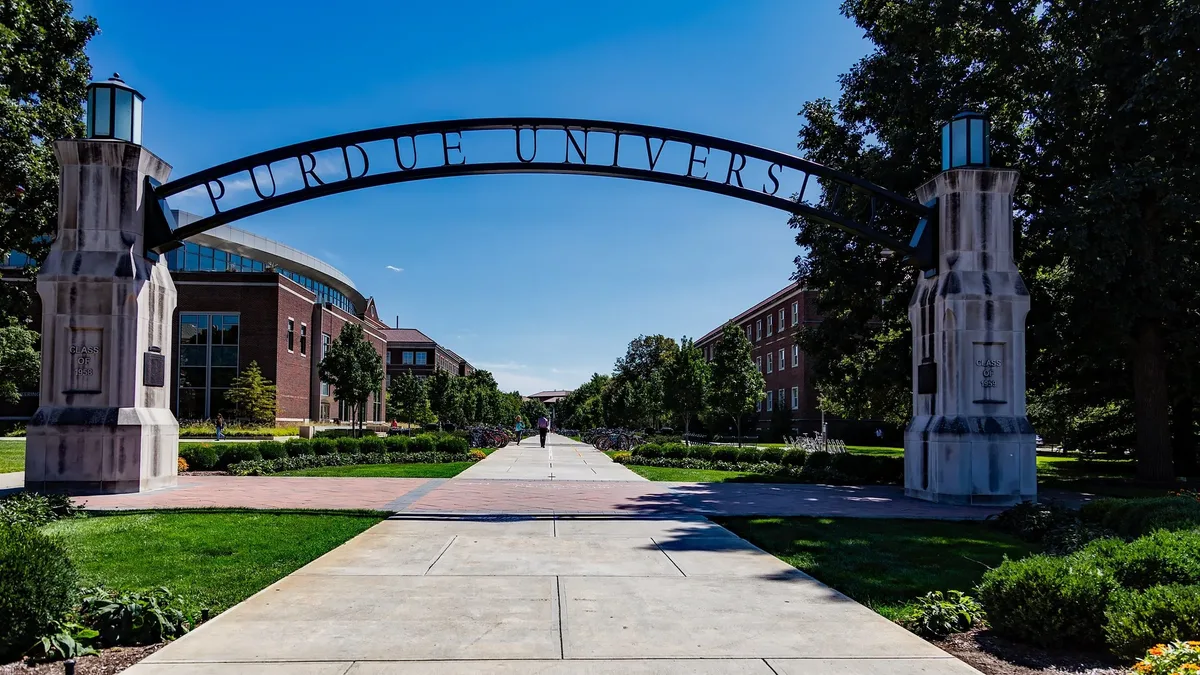
Purdue Business School's STEM Masters Offer Career Leap
Purdue University's Mitch Daniels School of Business reports high employment rates and salaries for graduates of its STEM-designated master's...