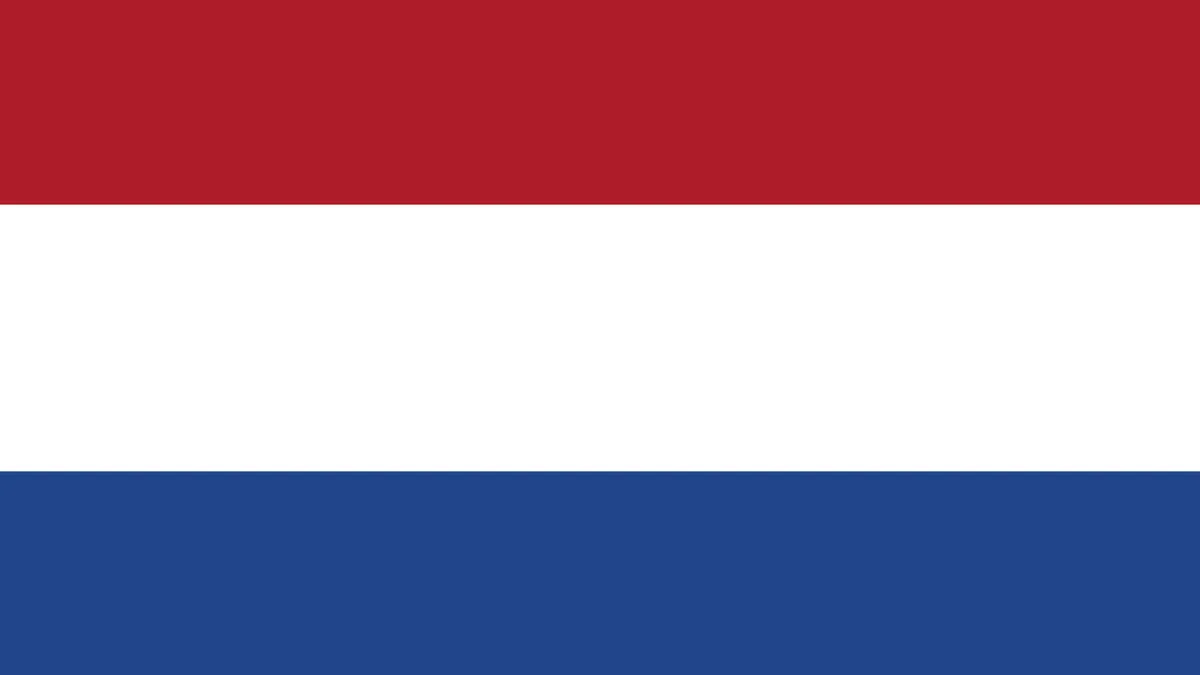
Netherlands
| Country of origin | The Netherlands |
|---|---|
| First created | 16th century (modern concept) |
| Original use | A sovereign state and constitutional monarchy |
| Capital city | Amsterdam (constitutional), The Hague (seat of government) |
| Official language | Dutch |
| Currency | Euro (EUR) |
| Government type | Parliamentary constitutional monarchy |
| Population range | Approximately 17-18 million |
Origin and history
The Kingdom of the Netherlands is a country located in Northwestern Europe. Its modern existence as a sovereign state began in the early 19th century, following the Napoleonic Wars. The territory has a much longer history, however, having been a prominent maritime and economic power during the Dutch Golden Age of the 17th century. The nation's origins lie in the Low Countries, a region historically comprised of various counties, duchies, and bishoprics. The Dutch Republic, a precursor state, emerged in the late 16th century after a protracted revolt against Habsburg rule. The contemporary constitutional monarchy was established in the 1810s, with the House of Orange-Nassau providing the hereditary monarchs. The country's history is deeply intertwined with water management, trade, and a tradition of comparative social liberalism.
What it is for
The Netherlands functions as an independent nation-state with a parliamentary democracy under a constitutional monarch. It is a member of the European Union, the United Nations, NATO, and numerous other international organizations. The country serves as a global hub for trade, logistics, and international law, hosting institutions like the International Court of Justice. Domestically, its government is responsible for the governance and public services of its constituent European territory and its Caribbean islands. The Dutch higher education system, comprising research universities and universities of applied sciences, is a primary reason international students seek access. A student visa for the Netherlands, formally known as a residence permit for study purposes, is the legal instrument that gates this access for non-EU/EEA/Swiss nationals, allowing them residency to complete a full-time accredited program.
Pros and cons
A significant pro of studying in the Netherlands is the widespread use of English in academic programs and daily life, greatly easing integration for international students. The teaching style is often interactive and focused on problem-based learning, which can build practical skills. A notable con is the ongoing and severe national housing shortage, where finding affordable accommodation, particularly in major student cities, is a major and stressful challenge that begins long before arrival. Students sometimes regret underestimating the high cost of living, which includes tuition fees, insurance, and daily expenses that can deplete budgets faster than anticipated. The Dutch directness in communication is often misconstrued as rudeness by some international students, leading to cultural friction. Furthermore, the climate, characterized by frequent rain, overcast skies, and strong winds, can negatively affect students accustomed to sunnier environments and contribute to seasonal mood changes.
Who it suits
This destination suits self-reliant and proactive individuals who are comfortable operating in an international environment and solving logistical problems like housing independently. It is well-suited for students in fields where Dutch institutions have strong reputations, such as agriculture, water management, engineering, and the social sciences. The structure appeals to those who prefer a less hierarchical educational model and enjoy collaborative, discussion-based classroom settings. Students from EU/EEA countries face far fewer bureaucratic hurdles than non-EU students, making it a more straightforward choice for them. It is less suitable for those who require a high degree of hand-holding from their host institution or who have a very limited budget without a significant financial buffer. The environment also suits individuals who are socially liberal and appreciate cycling as a primary mode of transportation within compact, well-connected cities.
Latest Netherlands news
Latest reporting
International Students Net Fiscal Gain for Netherlands
A CPB report finds international students are a net fiscal benefit over their lifetimes, with non-EEA university graduates contributing an average of

Crizac Expands Reach with Acquisition of Inova Education to Strengthen Mexico and Europe Presence
Crizac has agreed to acquire Inova Consultancy Limited, known as Inova Education, to expand its student recruitment operations in Mexico and Europe...