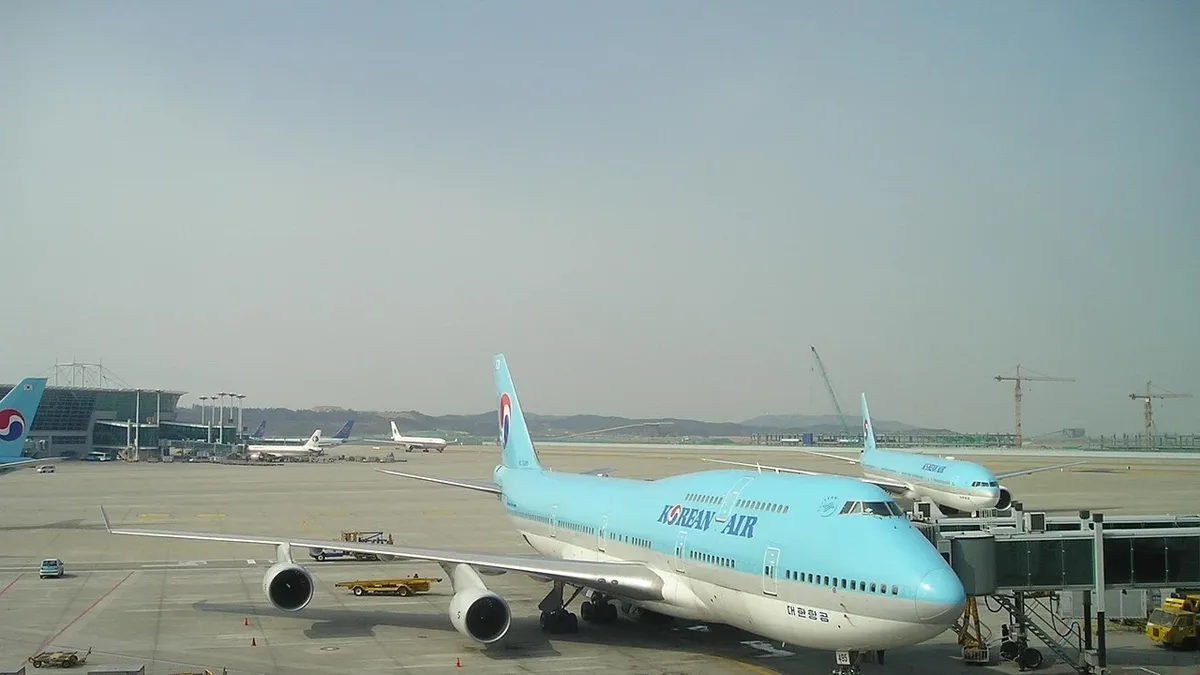
South Korea
| Capital | Seoul |
|---|---|
| Official language | Korean |
| Currency | South Korean won (KRW) |
| Time zone | Korea Standard Time (KST) |
| Visa type for students | D-2 Student Visa |
| Governing body for visas | Ministry of Justice |
| Typical academic year | March to February |
Overview
South Korea, officially the Republic of Korea, is a country located in East Asia on the southern half of the Korean Peninsula. It is bordered by North Korea to the north, the Sea of Japan to the east, the East China Sea to the south, and the Yellow Sea to the west. The country's terrain is largely mountainous, with a population concentrated in dense urban areas like the capital, Seoul. South Korea operates as a unitary presidential constitutional republic with a developed high-income economy. It is a global leader in technology and home to major multinational conglomerates known as chaebols. The country is also renowned for its significant cultural exports, including music, television dramas, and cinema, a phenomenon often referred to as the Korean Wave.
History
The modern nation of South Korea originates from the post-World War II division of the Korean Peninsula, which had been under Japanese colonial rule since the early 20th century. Following Japan's surrender in 1945, the peninsula was divided along the 38th parallel, with the southern zone administered by the United States and the northern zone by the Soviet Union. The Republic of Korea was formally established in the south in August 1948, following United Nations-supervised elections. This division led to the Korean War in 1950 when North Korean forces invaded the South, a conflict that ended in an armistice in 1953, not a peace treaty, leaving the peninsula technically still at war. The subsequent decades saw South Korea transform from a war-torn agrarian society into an economic powerhouse through rapid industrialization and export-oriented policies. The late 20th century also witnessed a transition from authoritarian rule to a stable, vibrant democracy through a series of popular movements and constitutional reforms.
How it works today
South Korea functions as a technologically advanced and highly connected society with one of the world's fastest average internet speeds. Its government is structured with executive, legislative, and judicial branches, with the President serving as head of state and government for a single five-year term. The economy is driven by sectors such as electronics, telecommunications, automobile manufacturing, shipbuilding, and popular culture, with a strong emphasis on research and development. Education is highly competitive and regarded as critical for social advancement, leading to intense pressure on students. The country maintains a mandatory military conscription system for able-bodied men due to the ongoing security situation with North Korea. Public infrastructure is highly developed, featuring efficient and extensive public transportation networks in major cities and a national high-speed rail system.
South Korea visa for indians
Indian citizens require a visa to enter South Korea for any purpose, including study, and there is no visa-on-arrival facility for ordinary passport holders. The primary visa for academic purposes is the D-2 Student Visa, which is mandatory for enrollment in full-time degree programs at Korean universities. Prospective students must first secure admission from a recognized Korean educational institution, which provides the necessary documentation for the visa application. Applications are submitted in person or through an authorized visa application center, such as VFS Global, which handles submissions for the Korean Embassy in India. The process involves an interview at the diplomatic mission for some applicants, particularly for long-term visas. It is crucial to apply well in advance of the intended travel date, as processing times can vary and may take several weeks.
South Korea visa requirements
The core requirements for a South Korean student visa include a completed application form, a valid passport, and recent passport-sized photographs. Applicants must submit the original Certificate of Admission issued by the Korean university and a detailed plan of study. Financial proof is mandatory, demonstrating the ability to cover tuition and living expenses, typically through bank statements or sponsorship letters. An academic transcript and diploma from the highest previously attained qualification are also required. Some applicants may need to provide a criminal background check certificate from the relevant Indian authorities. Depending on the specific case, the embassy may request additional documents, such as a health check report or proof of Korean or English language proficiency.
South Korea visa cost
The visa application fee for South Korea is set by the Korean diplomatic mission and is subject to change, so applicants must verify the current amount on the official website or at the application center. The fee varies depending on the visa type, duration, and number of entries, with single-entry visas generally costing less than multiple-entry visas. There is typically a separate service charge levied by the authorized visa application center for handling the submission and documentation check. All fees are non-refundable, even if the visa application is denied, and must be paid in the local currency as specified by the processing office. Additional costs may arise from document translation, notarization, postal services for passport return, and mandatory travel insurance. Applicants should budget for these ancillary expenses in addition to the core visa fee.
South Korea visa on arrival
South Korea does not offer a visa-on-arrival facility for Indian citizens holding ordinary passports. All visas must be obtained prior to departure from an authorized Korean diplomatic mission or its designated application center. Certain nationals from designated countries may be eligible for visa-free entry or electronic travel authorizations, but India is not currently on those lists. There is a specific "Transit Tourist" program that allows for a short, conditional stay without a visa for passengers transiting through Incheon Airport to a third country, but this is not a general visa-on-arrival scheme. Attempting to enter South Korea without the appropriate pre-arranged visa will result in denial of entry and immediate deportation at the traveler's expense. It is a critical mistake to assume visa-on-arrival is available, and thorough pre-travel verification is essential.
Why it matters
Understanding the visa process is fundamental for Indian students as it is the legal gateway to accessing South Korea's high-standard education system and renowned universities. Compliance with visa regulations ensures a smooth transition to student life, allowing for focus on academic goals rather than legal complications. The student visa also governs permissions for critical activities such as part-time work, which is allowed under specific conditions and with proper authorization. Proper visa status is directly linked to obtaining a foreigner registration card upon arrival, which is necessary for opening bank accounts, signing phone contracts, and accessing various services. Furthermore, maintaining valid visa status is crucial for future travel, potential post-graduate opportunities, and establishing a clean immigration record. Navigating this process correctly lays the foundation for a successful and uninterrupted educational experience abroad.
Common misconceptions
A prevalent misconception is that admission to a Korean university automatically guarantees visa issuance, whereas the consular officer makes an independent assessment based on the applicant's full profile. Many assume the process is quick, not accounting for potential administrative delays, document verification, and interview scheduling, which require advance planning. Some believe financial proof requirements are merely a formality, but authorities scrutinize these documents closely to ensure genuine financial sustainability for the duration of study. Another error is assuming the student visa allows unlimited work hours; in reality, part-time work is restricted and requires prior permission from the university and immigration office. Students often think their visa covers the entire program length, but some initial visas are issued for one year and must be renewed annually based on academic progress. Finally, there is a mistaken belief that overstaying a visa briefly is inconsequential, but it results in severe penalties, including fines, deportation, and bans on re-entry.
Latest South Korea news
Latest reporting
Westminster International Group Appoints Global Sales
Westminster International Group appoints Pradeep Singh Adhikari as Global Sales Director to expand its connected education model into India and South...

South Korea tightens rules for universities
South Korea's Ministry of Education has introduced mandatory quality controls for universities and agents recruiting international students...

South Korea Faces Challenge of Integrating and Retaining International Students
South Korea's rapid growth in foreign student numbers has led to a focus on programme and service design to help visiting students integrate into...