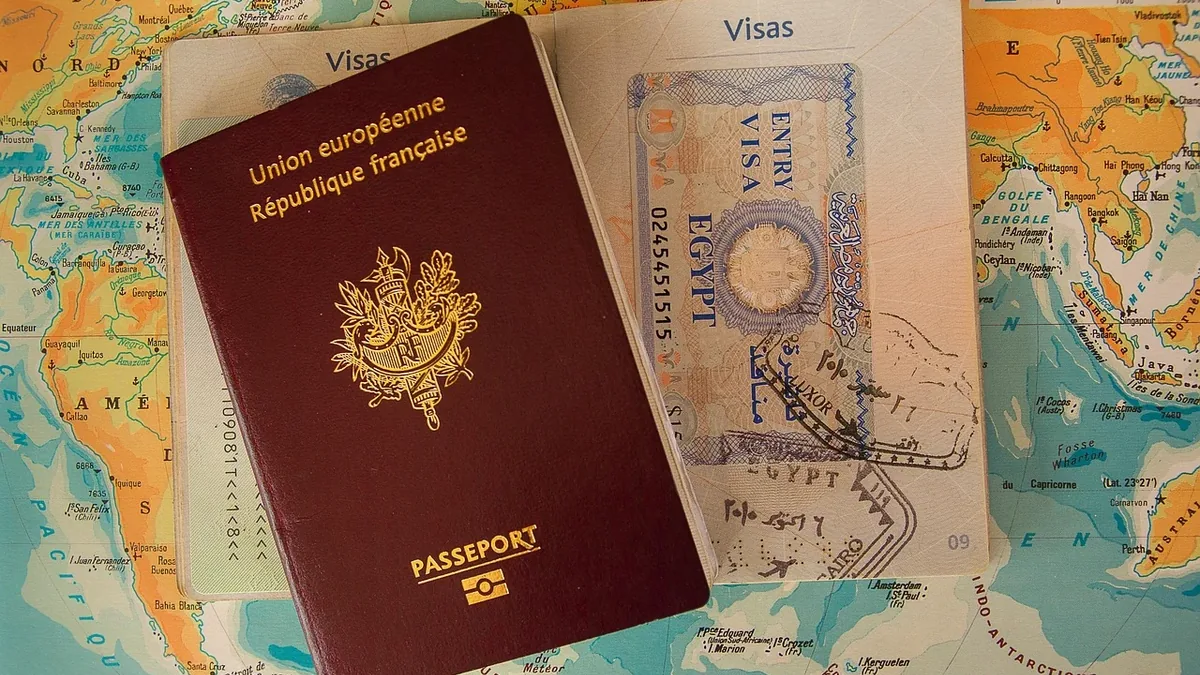
Visa Interview
| Purpose | To assess eligibility and intent for a student visa |
|---|---|
| Typical duration | 15 to 30 minutes |
| Conducted by | Consular officer |
| Primary focus | Ties to home country, academic plans, financial means |
| Common documents required | Passport, I-20/DS-2019, financial evidence, SEVIS fee receipt |
| Outcome | Approved, Denied, or Administrative Processing |
Overview
A visa interview is a mandatory, in-person appointment conducted by a consular officer of a destination country to assess an applicant's eligibility for a visa. For student visas, this interview is a critical gatekeeping step where the officer determines if the applicant meets the legal criteria for entry as a bona fide student. The primary purpose is to verify the information on the application and to evaluate the applicant's intentions, ties to their home country, and ability to support themselves financially. It is not a test of academic knowledge but an assessment of credibility and compliance with immigration law. The outcome hinges on the applicant's ability to convincingly demonstrate their study plans and their intent to return home after completing their program. Failure to satisfy the officer on these key points is the most common reason for a student visa denial.
History
The formal visa interview as a standardized component of the application process originated from the immigration control procedures developed by national governments in the late 19th and early 20th centuries. Its modern form, particularly for non-immigrant visas like the student category, was largely shaped by the United States Immigration and Nationality Act of 1952 and its subsequent amendments, which codified the requirement for consular officers to personally adjudicate applicants. This practice was adopted and adapted by other major destination countries like the United Kingdom, Canada, and Australia throughout the latter half of the 20th century as international student mobility increased. The interview evolved from a simple formality to a focused security and compliance measure, especially after global events that heightened border security concerns in the late 1990s and early 2000s. The process is now a near-universal step for applicants from countries with higher rates of immigration violation or visa overstay, as determined by each destination country's risk assessments. Its core historical function has remained consistent: to provide a final, discretionary human check on the paperwork submitted by the applicant.
How it works today
Today, the visa interview is a brief, high-stakes meeting typically lasting only a few minutes at a consulate or embassy of the destination country. The applicant must schedule the interview after completing an online application form and paying the requisite fee, often facing wait times of several weeks or months during peak seasons. At the appointed time, the applicant presents their passport and a portfolio of original supporting documents, which usually includes the visa application confirmation, a passport-sized photograph, the Form I-20 or equivalent Certificate of Enrollment, and proof of financial capability. The consular officer, from behind a secure window, will ask a series of direct questions about the applicant's study plans, choice of institution, funding, and post-graduation intentions. The officer has full discretion to approve or deny the visa application on the spot based on their assessment of the applicant's credibility and the strength of their documentation. The entire process is recorded for quality assurance, and decisions are subject only to very limited review, making the interview the definitive moment in the visa application journey.
Visa Interview visa for indians
For Indian nationals applying for student visas to major destinations like the United States, United Kingdom, Canada, and Australia, the interview is a compulsory and particularly scrutinized step. Indian students represent one of the largest international cohorts globally, leading to high application volumes and specific procedural focuses at consulates in cities like Mumbai, Delhi, Chennai, and Hyderabad. Consular officers are trained to pay close attention to the authenticity of financial documents, given the complexity of fund sourcing in India, and to assess the genuineness of the student's intent to return to a competitive job market. Interviews are conducted primarily in English, and officers expect clear, confident, and concise answers about the applicant's academic pathway and career goals. A significant number of Indian applicants are routed through administrative processing after the interview, which involves additional security checks and can delay the final decision by weeks or months. Success often hinges on demonstrating strong academic and professional ties to India that would compel the student's return after their degree.
Visa Interview visa requirements
The requirements for the student visa interview itself are distinct from the visa application requirements and focus on what the applicant must bring to the appointment. The mandatory items almost always include a valid passport, the printed confirmation page of the submitted online visa application form, and the interview appointment letter. A critical document is the Form I-20 (for the U.S.) or its equivalent like the Confirmation of Acceptance for Studies (CAS) for the UK, which must be signed by the applicant and the designated school official. Applicants must present original, and often translated, evidence of financial support, such as bank statements, loan approval letters, or sponsor affidavits, covering the full cost of tuition and living expenses. Academic transcripts, standardized test scores, and diplomas from previous institutions are required to validate the applicant's educational background and preparedness. Some consulates may also require specific local documents, such as a Police Clearance Certificate or a medical examination report, which must be arranged well in advance of the interview date.
Visa Interview visa cost
The cost associated with the visa interview is primarily the non-refundable visa application fee, which is mandated by the destination country's government and must be paid before the interview can be scheduled. For a U.S. student (F-1) visa, this fee is set by statute and must be paid online, while for a UK Student visa, the fee is paid as part of the online application itself. Additional costs are invariably incurred by the applicant for gathering required documents, such as fees for obtaining official transcripts, professional translation services, and courier services for document delivery. Many applicants also invest in optional services like visa consultation or interview coaching, which represent a separate private sector cost not required by the consulate. There is no fee payable directly at the interview window itself, as all mandatory government fees are collected electronically in advance. It is crucial to note that the visa fee is paid for the application processing and interview opportunity, not for the visa itself, and payment does not guarantee approval.
Visa Interview visa on arrival
The concept of a "visa on arrival" is fundamentally incompatible with a student visa interview process for major destination countries. Student visas are non-immigrant visas that require pre-approval based on a thorough assessment of documentation and personal interview, which cannot be conducted at a port of entry. Arriving at a border without the requisite student visa stamp in one's passport will result in denial of entry and immediate deportation, as the officer at the border does not have the authority to issue such a visa. Some countries may offer visa-free or visa-on-arrival entry for short-term tourism, but these schemes explicitly prohibit enrolling in academic study. Confusing a tourist visa on arrival with a student visa is a serious and costly error that can lead to immigration violations and future bans. The student visa interview process is deliberately designed to occur before travel, ensuring that all eligibility checks are completed in the applicant's home country jurisdiction.
Why it matters
The visa interview matters because it is the final and most significant discretionary hurdle in gaining legal permission to study in a foreign country, directly impacting global educational mobility and international relations. It serves as a primary tool for destination countries to enforce their immigration laws, preventing fraud and ensuring that student visa programs are not used as a backdoor for unauthorized work or permanent residency. For educational institutions, a rigorous interview process helps verify that admitted international students are genuine and adequately prepared, thereby protecting the integrity of their academic programs and campus communities. The process also forces applicants to thoroughly scrutinize their own plans, finances, and post-study intentions, which can lead to better-prepared and more successful students. Conversely, a poorly conducted interview or an incorrect denial can unjustly derail an individual's academic and professional trajectory, representing a significant personal and financial loss. The system's fairness and consistency are therefore constant subjects of diplomatic discussion and policy review.
Common misconceptions
A common misconception is that the visa interview is a mere formality if one has strong academic credentials and a valid admission letter, whereas in reality, these are necessary but not sufficient conditions for approval. Many applicants mistakenly believe that possessing the exact amount of funds shown on a bank statement is the sole financial requirement, not understanding that officers assess the stability, source, and history of those funds. There is a widespread but incorrect belief that the officer's decision is based on subjective personal likes or dislikes, when it is legally bound by specific criteria regarding intent, ties, and financial capability. Applicants often think using a visa consultancy guarantees approval, but consulates explicitly warn that misrepresentation or prepared, scripted answers from such services can lead to immediate denial for lack of authenticity. Another fallacy is that a denial is a permanent black mark; while a denial is recorded, a subsequent application with stronger evidence or changed circumstances can be successful. Finally, many assume the interview is the end of the process, not realizing that administrative processing after a successful interview can add substantial and unpredictable delays.
Latest Visa Interview news
Latest reporting

Australia Bans Dependants for Most Student Visa Holders
Australia will prohibit most international students from bringing family members as part of a migration overhaul.

Beaconhouse College Offers TNE Alternative as UK Visa Grants
UK study visa grants for Pakistani main applicants fell 47% year-on-year, as high costs push students towards Transnational Education options like

UK Student Visa Applications Hit Lowest Level Since 2022
UK Home Office data shows a sharp 17% drop in sponsored study visa applications for August 2026, the lowest monthly volume since 2022.

Australia announces new visa restrictions
Australia's Home Affairs Minister has outlined new migration reforms, including restrictions on student dependants and further study, with exemptions...
Germany and UK sharpen student visa and talent strategies
National governments are refining strategies to attract and retain international students, with Germany focusing on visa accessibility and the UK...
UK Student Visa Refusals Up 30%, CAS Issuance Down 27%
Data from Enroly shows a 27% year-on-year drop in Confirmation of Acceptance for Studies (CAS) issuance for the UK's September 2026 intake, alongside...