US Court Blocks Fixed-Term Rule for International Student
A US District Court has issued a preliminary injunction blocking a Department of Homeland Security rule that would have ended the 'Duration of Status'
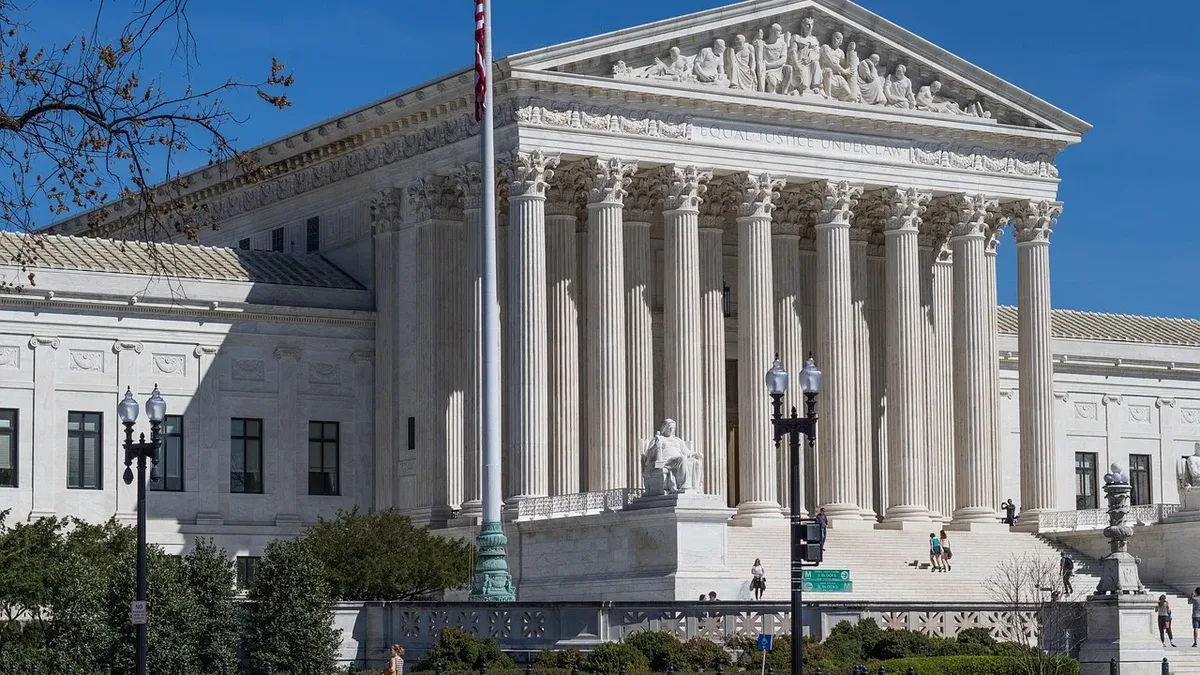
A US District Court has blocked a new immigration rule that would have fundamentally changed how long international students can stay in the country. Judge F. Dennis Saylor IV issued a nationwide preliminary injunction on 14 September, one day before the Department of Homeland Security's (DHS) 'final rule' was scheduled to take effect.
The rule aimed to replace the longstanding 'Duration of Status' (D/S) framework. Under the current system, students on an F-1 visa, which is issued by the U.S. Department of State to foreign nationals for full-time academic study, are admitted for the duration of their academic program. The proposed system would have instituted fixed admission periods: four years for degree students and 24 months for language students. Students needing more time to complete their studies or transition to post-graduation Optional Practical Training (OPT) would have had to apply for an extension from DHS.
A coalition of education groups, including NAFSA and the Presidents’ Alliance on Higher Education and Immigration, filed the legal challenge. They argued the rule would create significant uncertainty and act as a barrier to attracting global talent.
The Judge's Ruling and Rationale
In his order, Judge Saylor found the plaintiffs were likely to succeed in proving the DHS violated the Administrative Procedure Act. He stated the rule's promulgation was "arbitrary, capricious, or contrary to law." The judge was sharply critical of the potential impact, noting the damage to higher education and the U.S. Economy "is likely to be catastrophic."
He highlighted the lack of clear guidance for DHS officials reviewing extension requests and the fact that denials would be discretionary and unappealable. "That introduces, at a minimum, a high degree of uncertainty into the educational process, which will have an obvious deterrent effect on student enrolment," Judge Saylor wrote. He also dismissed the government's national security justification, calling it based on "a small handful of anecdotes" the rule would not address.
Reaction from Education Leaders
Plaintiffs in the case welcomed the injunction. NAFSA CEO Dr. Fanta Aw said the relief preserves "a fair and predictable system for international students and scholars and the institutions that welcome them." She emphasized that at a time of global competition for talent, the U.S. Should not be creating new barriers.
Miriam Feldblum of the Presidents’ Alliance stated the decision "recognises the serious and irreparable harm this rule would cause to international students and scholars, higher education institutions, and communities across the country."
What the Proposed Rule Would Have Changed
The blocked rule would have shifted the U.S. From a flexible, program-length admission system to a rigid, time-limited one. The following table outlines the key proposed changes based on the source material:
| Admission Framework | Proposed Fixed Admission Period | Extension Required? |
|---|---|---|
| Duration of Status (Current) | For the length of the academic program | No, for program completion |
| Proposed New System | 4 years for degree students | Yes, for any time beyond 4 years |
| Proposed New System | 24 months for language students | Yes, for any time beyond 24 months |
What Happens Next
For now, the Duration of Status system remains in place. However, the legal battle is not over. Leading immigration law firm Fragomen advises that while DHS is barred from implementing the rule, the agency is likely to appeal quickly. Employers and students should be prepared for the possibility of a reversed decision and swift implementation with little notice.
The court's injunction postpones the final rule until the case is fully resolved on its merits. Judge Saylor concluded that the balance of equities and the public interest favored issuing the injunction to prevent immediate and irreparable harm.